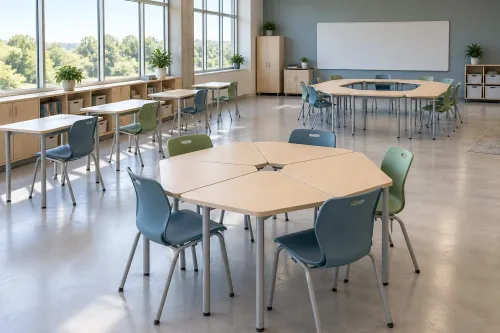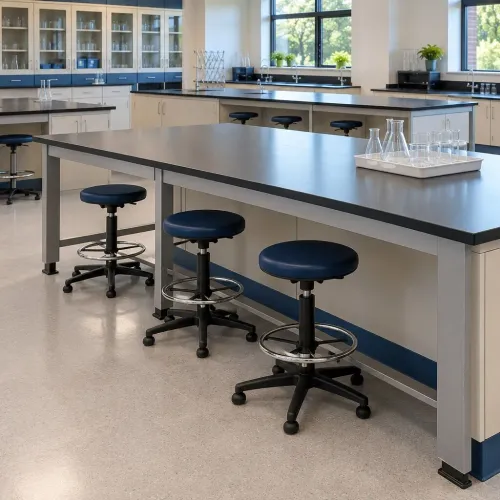
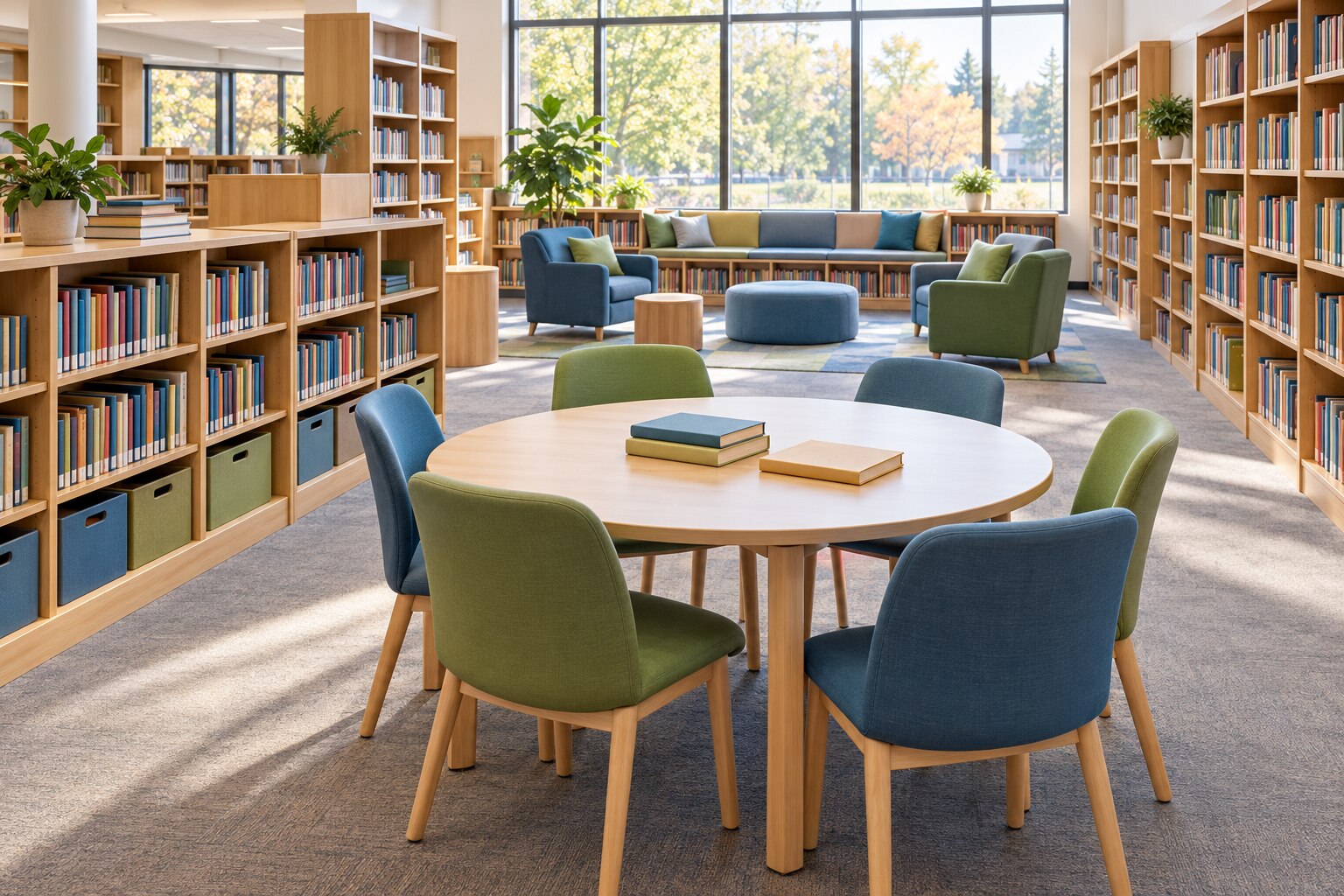
A successful school library must let children browse independently, settle into quiet reading, and join a group lesson without turning circulation paths into obstacle courses. Use the room’s dimensions, collection size, age range, noise level, and safety requirements to choose furniture that remains accessible, maintainable, and easy to reconfigure.
Key takeaways
- Create quiet, browsing, and group-learning zones with an unobstructed route.
- Use child-height shelves and check that children can reach books safely.
- Match shelf capacity and display space to collection size and browsing habits.
- Choose flexible seating and tables that support solo reading, pairs, and groups.
Divide the Library Into Quiet, Browsing, and Learning Zones
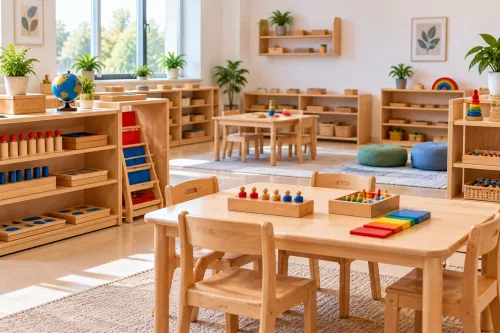
Arrange the school library layout as three connected zones: a protected quiet reading zone, an easy-to-scan browsing area, and a group learning zone near teaching resources. Keep a continuous, unobstructed route between the entrance, shelves, seating, and exit so children can move without crossing active discussions.
- Place the quiet reading zone along the least trafficked wall, away from the entrance, circulation desk, and group tables. Use lounge seats, small chairs, or reading nooks with open sightlines so adults can supervise without interrupting readers.
- Put the browsing area between the entrance and the main collection. Face a limited number of low displays toward children, then place taller spine-out shelves behind them; this improves independent selection without using display furniture for the entire collection.
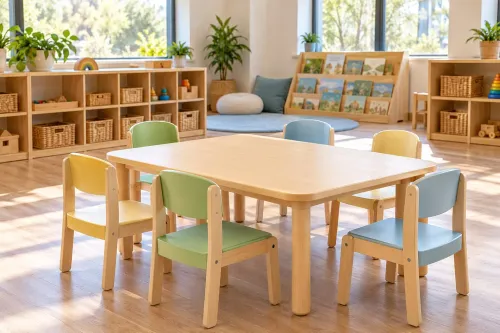
- Position the group learning zone near a writable wall, screen, or teaching materials. Use tables and chairs that can combine for storytelling, projects, or pairs, while leaving a direct route around every arrangement.
Do not rely on shelving alone to contain noise. Hard tabletops, exposed casters, and dragging chairs transmit sound, so specify resilient feet, quiet casters, and sound-absorbing wall or ceiling surfaces.
For a defensible acoustic target, use ANSI/ASA S12.60 classroom benchmarks: no more than 35 dBA unoccupied background noise and reverberation time of 0.6 seconds in rooms up to 10,000 square feet, or 0.7 seconds in larger rooms. Keep rolling furniture out of the quiet reading zone when conversations begin.
Plan Clearances and Furniture Sizes Around Children’s Actual Reach
Set the library aisle width at 36 inches clear, and reserve a 60-inch-diameter wheelchair turning clearance wherever a child must turn between shelves, tables, or reading areas. Measure between the finished edges of furniture, not between legs that later collect bags and books.
| User group | Shelves and reach | Seat height and table height |
|---|---|---|
| Kindergarten | Put everyday books and controls between 15 and 36 inches; keep low bins stable and easy to see. | Select EN 1729-1 sizes around 260–310 mm seat height and 460–530 mm table height. |
| Primary grades | Keep the most-used materials within 15–48 inches; place reserve stock above that zone. | Select EN 1729-1 sizes around 310–380 mm seat height and 530–640 mm table height. |
Specify child-sized library furniture by stature and EN 1729-1 size class, not by labels such as “kindergarten chair.” The wrong seat height and table height leave feet unsupported, raise shoulders, and turn a good work surface into an obstacle.
- Keep every route at least 36 inches wide after adding chair groups, display bins, and book trucks.
- Provide a 32-inch clear opening only where the route is no longer than the permitted short length; do not use it as the main aisle.
- Test the lowest shelf and bin with an actual child, then check wheelchair reach from a seated position.
A lower kindergarten reach zone improves independence, but it must not replace accessible shelving between 15 and 48 inches.
Match Storage Formats to Collection Size and Independent Selection
Reserve low, front-facing capacity for new, high-interest, and teacher-selected titles; use taller spine-out shelving for most of the collection. Front-facing book bins make covers visible, but they hold far fewer books per metre and consume more floor area than spine-out shelves.
| Format | Capacity planning | Independent access |
|---|---|---|
| Spine-out shelving | Measure usable shelf length and divide by the average book width; leave space below the fill line for easy removal. | Yes, for frequently borrowed books kept between 15 and 48 inches high |
| Front-facing book bins | Count each bin’s usable slots, then test the maximum load without crushing covers or blocking labels. | Yes, for picture books and current-interest titles |
| Closed storage | Count adjustable shelf length or container volume; reserve it for stock children do not need to browse. | No, for teacher resources, reserves, damaged books, and supplies |
Set the storage brief by user and replenishment frequency, not by one identical unit throughout the room.
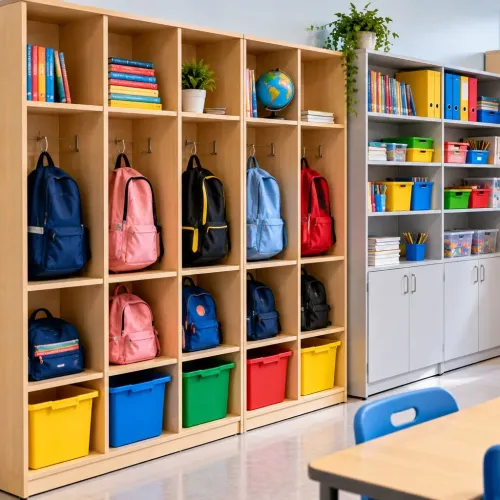
- Put everyday picture books, board books, comics, and browsing baskets in low open storage. Use a visible fill line; overfilled bins hide titles and damage spines.
- Keep teacher guides, duplicate copies, archive material, and craft supplies in closed storage or staff-accessible cupboards.
- Retain an unobstructed reach range of 15 to 48 inches for wheelchair users; add a lower kindergarten reach zone without eliminating that accessible range.
- Specify smooth, sealed, repairable bins that can be removed or drained for cleaning, and anchor every tall shelving run to the wall.
Choose Seating and Tables for Reading, Pairs, and Group Work
Use a reading nook for sustained individual reading, not for every child in the library. Pair it with reading nook alternatives such as a wall-side chair, floor cushion, or small bench so children can choose without crowding one enclosed area.
| Option | Best use | Specify |
|---|---|---|
| Reading nook | Quiet, independent reading or listening | Place it away from group learning tables; add soft, cleanable surfaces |
| Chair and small table | Browsing, drawing, or one-to-one support | Match seat and table heights to children’s stature under EN 1729-1 |
| Floor seating | Storytelling, informal reading, or temporary gatherings | Use washable cushions or mats and preserve a clear route to exits |
| Bench | Side-by-side reading or short waits | Provide back support for longer sessions and avoid blocking shelves |
| Group learning table | Pair work, projects, discussion, and teacher-led activity | Leave enough knee space and position it in the collaborative zone |
| Mobile table or chair | Rapid changes between lessons and events | Choose quiet casters, resilient feet, and locking mechanisms |
Flexible seating works when every option has a defined purpose; too many loose pieces turn circulation into an obstacle course. Mobile furniture also increases rolling and impact noise, so library acoustics depends on hardware and layout, not ceiling treatment alone.
For a group-learning zone, use ANSI/ASA S12.60 as a defensible acoustic target: 35 dBA maximum unoccupied background noise and reverberation time no higher than 0.6 seconds in rooms up to 10,000 square feet. Keep hard tabletops and exposed casters away from quiet reading areas.
Specify Furniture That Stays Safe, Clean, Quiet, and Adaptable
Approve furniture only after the supplier and installer document how each unit will remain stable, cleanable, quiet, and usable under daily child traffic.
1. Require a tip-over drawing for every tall shelf or shelving run, including anti-tip anchoring, fixing hardware suited to the wall substrate, and installation instructions. Obtain a site-specific substrate check and installer sign-off; a heavy base does not replace wall anchoring.
2. Inspect samples for rounded edges and pinch points at doors, hinges, folding parts, sliding panels, and gaps between mobile units. Reject exposed screws, sharp corners, unstable bases, and openings that can trap fingers.
3. Specify wipe-clean, sealed surfaces and obtain cleaning instructions, approved disinfectants, replacement-part details, and upholstery maintenance guidance. For pods, cushions, and lounge seating, require upholstery fire safety documentation that identifies the applicable test; California TB117-2013 is not a substitute for local fire-code review.
4. Replace “low-VOC” with a documented TSCA Title VI formaldehyde limits basis: 0.05 ppm for hardwood plywood, 0.09 ppm for particleboard, 0.11 ppm for medium-density fiberboard, and 0.13 ppm for thin MDF. Request labels or compliance documents for panels and finished products.
5. Require resilient feet, quiet casters, and lockable braking or directional-locking casters where units must stay put. Test movement, wheel locks, and cleaning access in the actual room.
Use this checklist for Arko Global and competing bids alike; a familiar supplier name cannot replace evidence, samples, and installer sign-off.
Related products
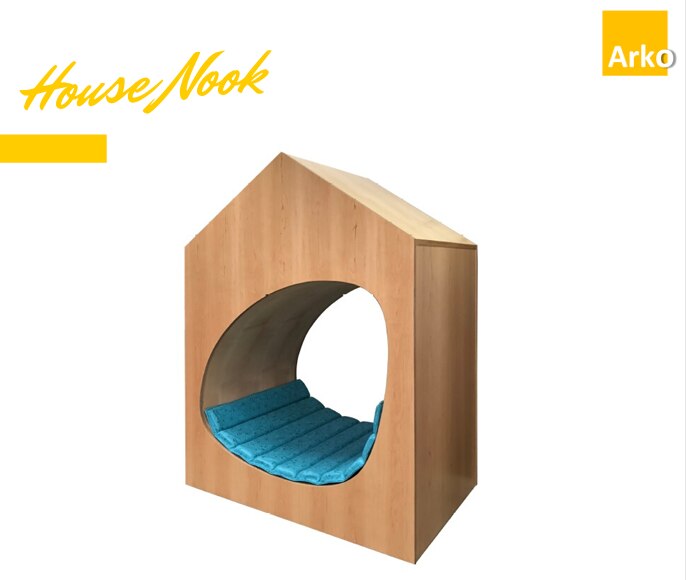 | KINDERGARTEN TABLES A cozy place to read a book alone or with a friend. Colorful fabric an finish options can really brighten up library or school spaces and make it... View product → |
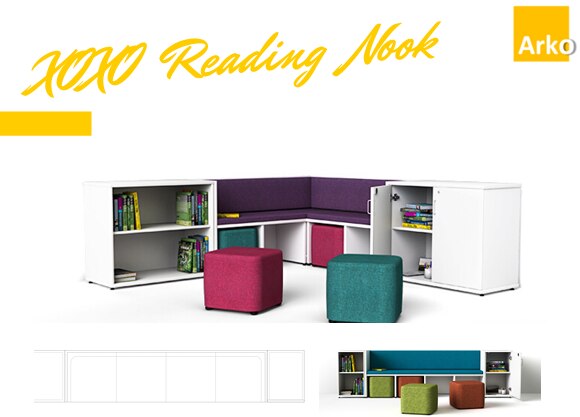 | KINDERGARTEN TABLES The XOXO Reading Nook is the perfect element to include into any classroom that needs a quiet reading space. View product → |
Frequently asked questions
How should you divide a school library into activity zones?
Create a protected quiet reading zone, an easy-to-scan browsing area, and a group learning zone near teaching resources. Keep a clear route between the entrance, shelves, seating, and exit.
How do you choose furniture sizes for children?
Base shelf height, seat height, table height, and clearances on children’s actual reach and movement space rather than adult dimensions. Keep frequently used books within independent reach.
Which storage formats work best for a school library?
Use low, forward-facing displays for independent selection, standard shelves for larger collections, and labelled storage for teaching resources. Match each format to collection size and browsing needs.
What seating and tables support different library activities?
Combine individual reading seats with tables sized for pairs and larger groups. Arrange them so quiet readers are separated from discussions and collaborative work.
What should you check when specifying school library furniture?
Check stability, rounded or protected edges, cleanable surfaces, quiet hardware, accessible clearances, and layouts that can adapt as collections and teaching activities change.
Related products
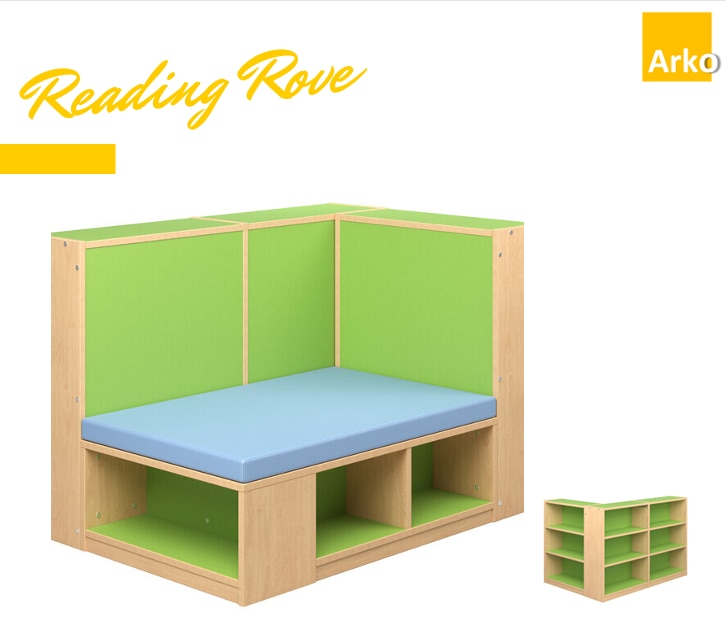 | KINDERGARTEN TABLES After picking out a book, you need to find a comfortable place to enjoy it. View product → |
 | SHAPES / LAYOUTS Arko Global is one of the leading manufacturers of kindergarten shapes and layouts in Bangalore, specializing in creative, safe, and child-friendly... View product → |