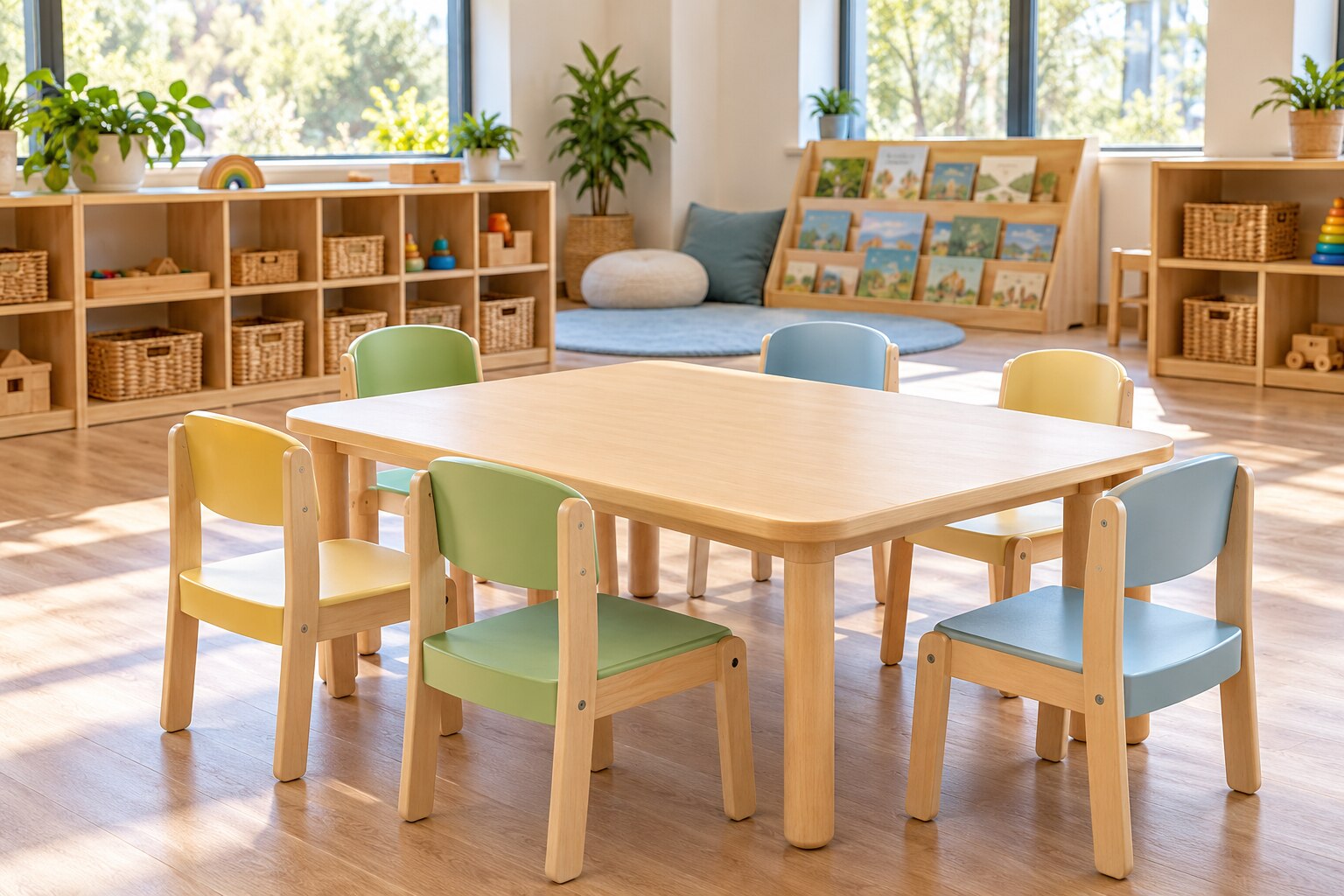
A preschool furniture quotation should show more than cheerful designs and a “child-safe” claim. By the end, you will be able to check the evidence behind safety, compare materials and dimensions, inspect a sample, and judge whether a manufacturer can plan a room around its real constraints.
Key takeaways
- Request the complete safety file, including standards, tested dimensions, materials, and laboratory results.
- Measure children and classroom zones before approving furniture dimensions or layouts.
- Inspect joints, edges, finishes, stability, cleanability, and replaceable parts in a physical sample.
- Ask for evidence that the manufacturer can coordinate furniture, delivery, installation, and classroom layout.
What safety documents should a preschool furniture manufacturer provide?
Request the complete safety file before comparing quotations; a brochure or single certificate is not enough. Your preschool furniture safety checklist should require the exact standard name and edition, product family, tested dimensions, materials, joint design, accessories, sample identification, test date, conditioning or cleaning regime, laboratory name, accreditation status, and pass/fail result.
For chairs and stools intended for children roughly ages 2–5, ASTM F2613 is relevant to stability, structural integrity, and other hazards. It does not establish a test basis for tables, shelving, or storage.
Ask for the manufacturer’s methods and results for cyclic loading, racking, impact, stability, and joint loosening, rather than accepting one static load figure.
Request these separate records:
- TSCA Title VI emissions evidence for hardwood plywood, MDF, or particleboard sold in the United States.
- Component-level reports showing the 90 ppm lead limit for coatings and the applicable 0.1% phthalate threshold in accessible plasticized parts.
- California TB117-2013 evidence for upholstered furniture, naming the tested foam, barrier, fabric, and cover combination.
- A third-party report from an ISO/IEC 17025-accredited laboratory, followed by confirmation that production matches the tested sample.
| Document | What it proves | Do not treat it as proof of |
|---|---|---|
| Structural report | Strength, stability, and durability under stated methods | Chemical compliance |
| Chemical-content report | Lead or phthalate limits in identified components | Structural safety |
| GREENGUARD Gold certification | Chamber-tested emissions from a finished product | Durability, cleanability, or absence of every regulated substance |
How do you check that furniture fits children and the room?
Do not accept “child-size” or an age range as proof of fit. Verify preschool furniture dimensions against child stature, dimensional size categories, and the room’s measured constraints.
1. Request seat height, seat depth, seat width, backrest height, table height, tabletop thickness, and clearance beneath each table. EN 1729-1 furniture sizes use functional dimensions and corresponding markings, so one preschool room may need more than one size.
2. Test the actual fit: both feet should rest securely, elbows should reach the tabletop without raised shoulders, and children should reach shared materials without leaning across others. Check reach range classroom furniture against the shortest and tallest users.
3. Measure the teacher’s route to every child, then draw circulation paths around tables, shelving, doors, windows, electrical points, fire exits, and accessibility routes. A room full of correctly sized furniture can still block supervision or evacuation.
4. Where ADA requirements apply, verify clear floor space plus knee and toe clearance at an accessible work position. Child stature furniture does not automatically provide an accessible seat.
5. View the room from the adult supervision point and remove tall storage that creates blind corners. Give the manufacturer a measured plan showing columns, radiators, sockets, existing shelving, door swings, and exit paths.
Require a room-by-room furniture schedule listing each item’s dimensions, quantity, size marking, location, and required clearance. Reject layouts shown only as coloured shapes.
Which materials and finishes will survive preschool use?
Plywood gives layered strength and screw joints you can repair; solid wood can be refinished but moves as moisture changes. MDF and particleboard provide uniform panels, yet unsealed edges swell after spills. Compare preschool furniture materials by the damage each material tolerates, not by appearance alone.
| Material | Advantage | Failure to check |
|---|---|---|
| Plywood | Strong layers; repairable screw joints | Delamination, exposed plies, poor edge sealing |
| Solid wood | Refinishable and durable | Moisture movement, splits, loose joints |
| MDF and particleboard | Consistent, economical panels | Swollen edges and stripped fasteners |
| Plastic | Moisture resistance | Unidentified polymer, cracking, scratches |
| Laminate | Protective wear surface | Failed adhesive or unsealed edges |
| Metal frame | High structural strength | Corrosion beneath damaged coating |
Specify every coating and bonding product by name: paint, powder coat, laminate, edge band, adhesive, sealant, and polyurethane. A smooth finish does not prove disinfectant resistance. Require formaldehyde emissions evidence, including TSCA Title VI documentation for U.S. composite wood, and do not accept “low VOC” as a substitute.
For upholstery, request fabric composition, abrasion results, seam construction, removable-cover design, repeated-wash results, foam density, firmness, California TB117-2013 documentation for the tested foam-barrier-fabric combination, and replacement covers. Test or request evidence against saliva, sweat, crayons, bleach, alcohol, quaternary ammonium compounds, moisture, and washing.
Specify disinfectant compatibility for furniture using the school’s actual product, dilution, contact time, and cleaning frequency. Identify vinyl, soft edging, and flexible grips, then request applicable 0.1% phthalate testing. Ask whether scratches, swollen edges, torn seams, or failed fasteners can be repaired or replaced individually.
What should you inspect in a prototype or showroom sample?
A preschool furniture showroom inspection should expose failures that certificates and photographs cannot show. Bring a cloth, test the moving parts, and assess the sample as a child would use it—not as it appears when untouched.
1. Run your hand across every edge and corner, including the underside of tabletops and the back of shelving. Reject sharp radii, splinters, chipped laminate, exposed staples, loose screws, unfinished drilled holes, and caps a child can remove.
2. Push the unit from several directions to check wobble. Inspect glides, casters, connectors, and joints for movement, then request furniture load ratings identifying the tested shelf, seat, tabletop, and storage arrangement rather than one figure for the range.
3. Open doors and drawers through their full travel. Check pinch-point control at hinges, gaps, sliding parts, and folding mechanisms, then test tip-over resistance with doors, drawers, and intended contents arranged normally.
4. Examine upholstery seams, piping, foam recovery, and hidden dirt traps. Confirm that covers can be removed without damaging fasteners, and ask which foam, fabric, barrier, and cover combination was tested.
5. Request shelving anchoring details and installation instructions naming the wall type, fasteners, and required tools. For flat-packed or reconfigured furniture, require a pilot installation and inspect joint fit, exposed hardware, edge damage, wobble, and reassembly after the planned number of cycles.
6. Obtain a replacement-parts plan for glides, casters, fasteners, seat shells, tabletops, and connectors. A long warranty offers little protection when wear parts are unavailable or require replacing the whole unit.
How can you judge whether a manufacturer can deliver a workable classroom?
A workable classroom is proven by a coordinated installation pack, not an attractive generic plan. Ask a preschool classroom layout manufacturer for shop drawings for school furniture, a dimensioned floor plan, 3D views, an installation sequence, anchoring details, and a room-by-room furniture schedule.
Give the supplier measured wall lengths, columns, door and window locations, electrical points, fire exits, accessibility routes, existing shelving, and non-movable equipment. Check the completed proposal for:
- Adult sightlines, circulation widths, accessible clearances, cleaning access, and unobstructed exit routes after every unit is placed.
- A change-control process linking the approved drawing, prototype, and production batch.
- A written procedure for damaged or missing parts during installation.
Require the quotation to classify every component clearly:
| Component status | What the quotation must state | Risk if unclear |
|---|---|---|
| Standard | Catalogue item code, dimensions, finish, and size category | Substitutions can go unnoticed |
| Made to measure | Final dimensions, tolerances, and approval point | Site errors can create unusable gaps |
| Substituted | Replacement code, reason, and drawing revision | The installed room may differ from the approved design |
Arko Global is useful to assess by the measured plan’s accuracy and the schedule’s clarity, not by presentation images. Before signing, approve one representative room, record defects, and require a pilot installation; make acceptance depend on the installed configuration matching the drawings and agreed test documentation.
Related products
 | SHAPES / LAYOUTS Arko Global is one of the leading manufacturers of kindergarten shapes and layouts in Bangalore, specializing in creative, safe, and child-friendly... View product → |
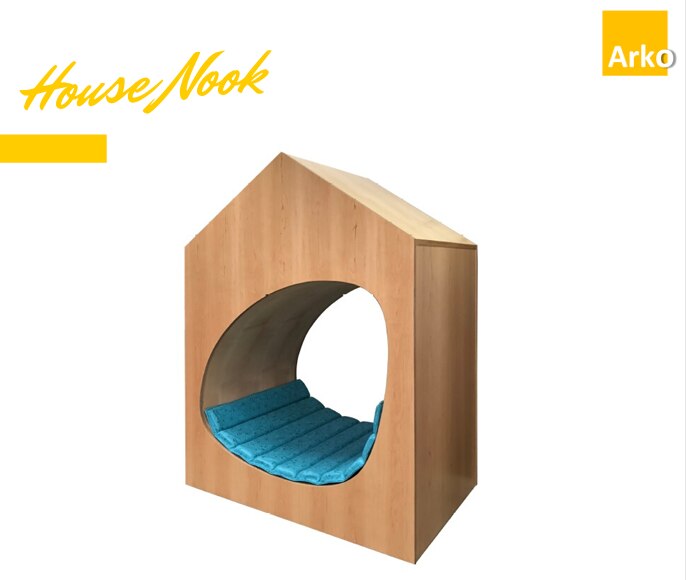 | KINDERGARTEN TABLES A cozy place to read a book alone or with a friend. Colorful fabric an finish options can really brighten up library or school spaces and make it... View product → |
Frequently asked questions
What safety documents should a preschool furniture manufacturer provide?
Request the complete safety file: the exact standard name and edition, product family, tested dimensions, materials, joint design, accessories, sample identification, test date, conditioning or cleaning regime, laboratory name, accreditation status, and pass/fail result.
How do you check that preschool furniture fits children and the room?
Compare furniture dimensions with the children’s age and body size, then measure doorways, circulation routes, activity zones, storage clearances, and the room layout before ordering.
Which materials and finishes will survive preschool use?
Check whether surfaces resist repeated cleaning, moisture, stains, impact, and edge damage. Confirm the finish, substrate, edge treatment, hardware, and replacement options rather than judging appearance alone.
What should you inspect in a prototype or showroom sample?
Inspect stability, sharp edges, pinch points, joints, fasteners, seat and table proportions, surface defects, cleanability, and access to parts that require maintenance.
How can you judge whether a manufacturer can deliver a workable classroom?
Ask for drawings, installation responsibilities, delivery sequencing, room measurements, furniture schedules, after-sales support, and evidence from completed classroom projects.
Related products
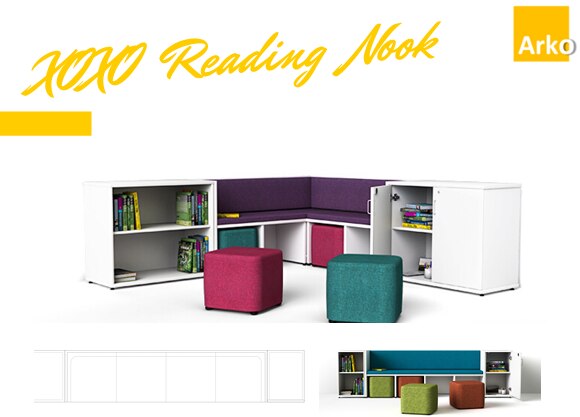 | KINDERGARTEN TABLES The XOXO Reading Nook is the perfect element to include into any classroom that needs a quiet reading space. View product → |
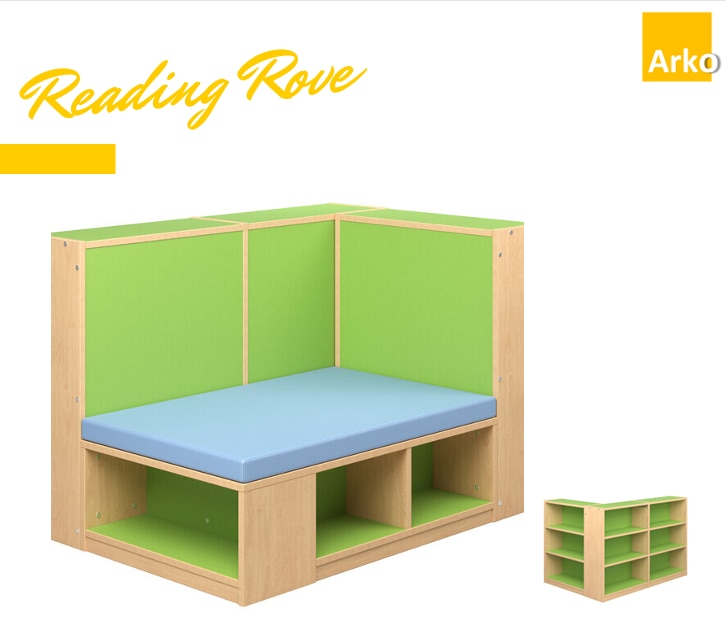 | KINDERGARTEN TABLES After picking out a book, you need to find a comfortable place to enjoy it. View product → |