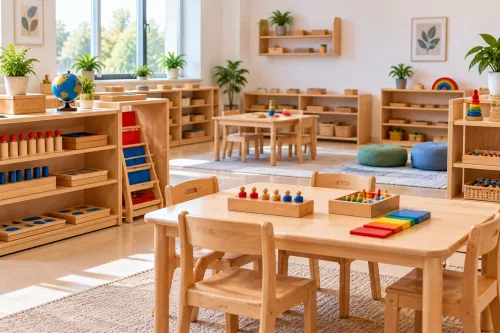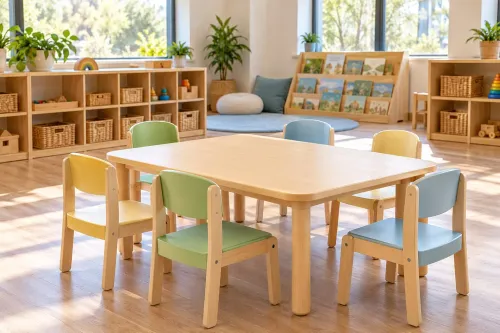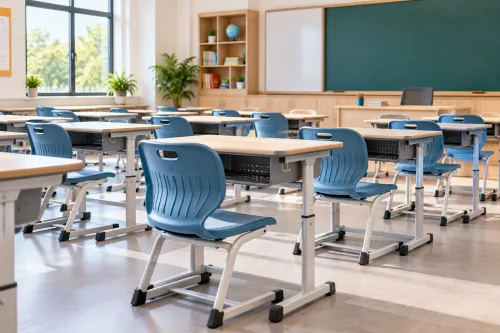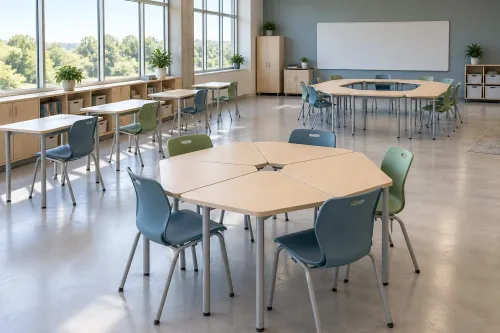
A classroom storage plan has to do more than hold objects: it must keep books reachable, bags out of walkways, teaching kits available to adults, and heavy or hazardous items secured. By the end, you will be able to zone each material, estimate capacity, compare storage formats, and write a safer procurement brief.
Key takeaways
- Place children’s daily items near entry and work areas.
- Use open cubbies for access and lockable units for controlled materials.
- Measure real books, bags, trays, and teaching kits before ordering shelves.
- Keep storage clear of doorways, walkways, exits, and active learning spaces.
Create storage zones before choosing furniture
Divide the classroom into storage zones by user, frequency, and risk before selecting units. Keep children’s daily items near their entry and work areas; place teacher-controlled, heavy, dusty, or hazardous items elsewhere.
| Zone | Contents | Access and control |
|---|---|---|
| Book storage | Picture books, readers, reference books | Use low, visible shelves near the reading area; keep heavy book sets on the lowest level. |
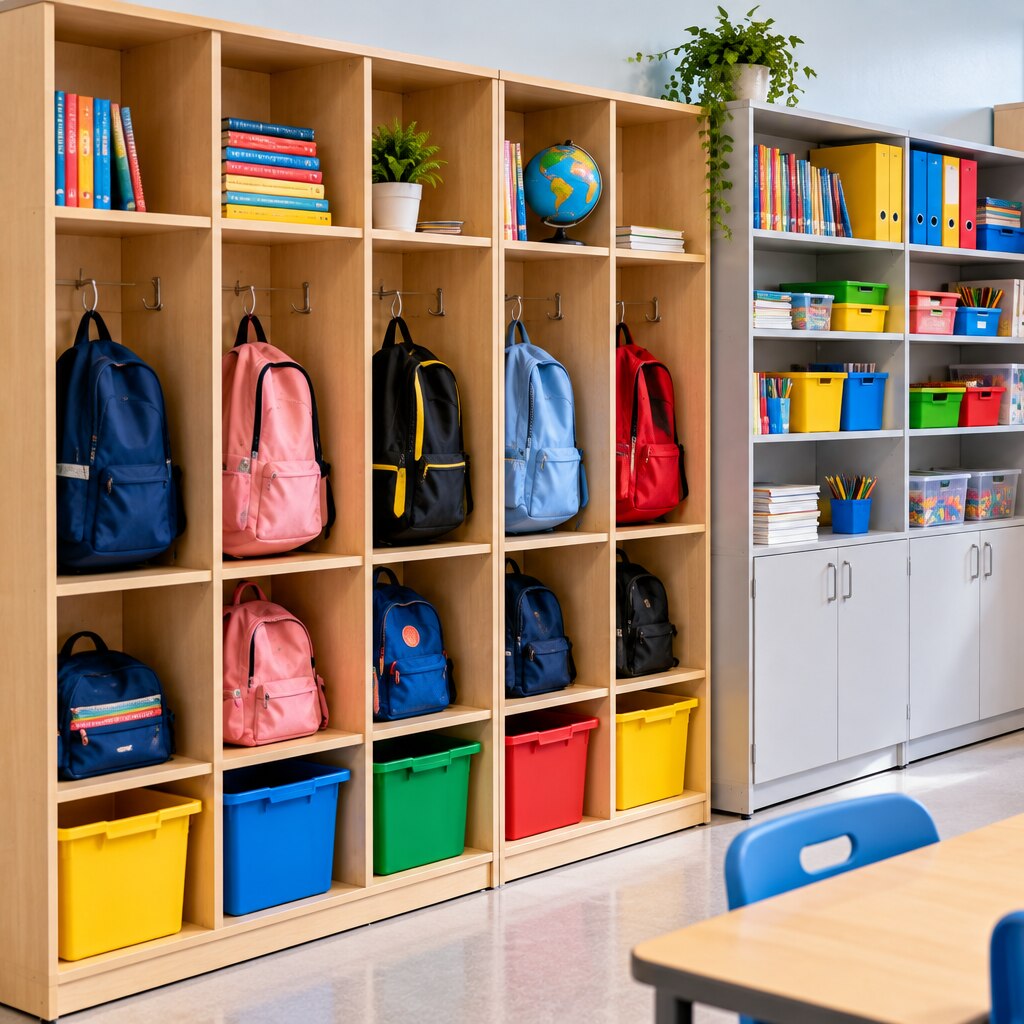
| Bag storage | Backpacks, lunch bags, coats | Put individual hooks or vertically divided bays near the entrance; check the largest bag so it does not project into the walkway. |
| Teaching materials storage | Lesson kits, paper reams, laptops, worksheets | Keep teacher-controlled items in labelled cupboards or drawers; store heavy loads low and provide a separate accessible bay. |
| Art supplies | Paint, glue, brushes, paper, aprons | Use labelled bins or drawers beside the art area; close dusty or spill-prone supplies. |
| Manipulatives | Blocks, puzzles, counters, construction sets | Use shallow, child-reachable bins near the activity area, with one container per set. |
| Cleaning items | Disinfectant, wipes, gloves, waste liners | Use a locked cupboard away from children, food, and art materials. |
| Display and overflow | Finished work, spare materials | Use wall-mounted storage or a designated cupboard rather than occupying daily-use shelves. |
Separate zones prevent bags from consuming book storage and stop worksheets from competing with teaching materials storage. Open cubbies speed arrival checks but expose contents to dust and visual clutter; doors improve concealment while adding queues and hardware to maintain.
Anchor tall or narrow units to the wall or floor, and keep every zone clear of exits, door swings, emergency equipment, and required circulation width.
Match each storage format to the job
Choose the format by access, visibility, movement, and cleaning—not by appearance. Open shelving beside a child’s work area serves daily-use items; closed cupboards protect teacher materials that should not be handled without permission.
| Format | Best job | Use it when |
|---|---|---|
| open shelving | Books and frequently used resources | Children need to choose and return items independently |
| closed cupboards | Teacher kits, chemicals, spare stock | You need dust control, concealment, or restricted access |
| cubbies | Bags and personal belongings | Each child needs a visible, assigned drop-off space |
| mobile carts | Rotating lessons and shared materials | Rooms change layout; specify positive-locking casters and loaded stability |
| bins | Loose manipulatives, blocks, or art tools | Contents need quick grouping and carrying |
| drawer units | Worksheets, paper, and small parts | You need labelled, shallow categories rather than piles |
| wall-mounted storage | Lightweight displays and compact supplies | Floor space is limited and the fixing can be securely anchored |
A mobile shelf used as a divider is not automatically a safe partition. Require evidence that the loaded unit stays stable while pushing, stopping, and receiving child contact, then define where staff park or secure it.
Provide at least one accessible bay for every storage function. Unobstructed reach is generally 15 to 48 inches above the finished floor; a shelf lip or counter can reduce the forward-reach limit to 44 inches.
Coordinate storage with the chosen pupil-table size marks under EN 1729-1 and EN 1729-2. Anchor tall, narrow units with the manufacturer’s anti-tip hardware, and specify wipeable handles, bin rims, shelf fronts, and hooks without deep soil-trapping grooves.
Size shelves, bays, and reach ranges from real contents
Measure the contents before ordering a unit. Use this storage capacity calculation: number of items × average width × 1.2 for handling space, then add 10–20% growth capacity. For books, measure the widest titles; for bags, measure the largest loaded bag, not an empty sample.
| Contents | Shelf depth and spacing | Compartment and load decision |
|---|---|---|
| Picture books | 250–300 mm deep; shelf spacing should clear the tallest book by 25–40 mm | Use a face-out section for browsing, then spine-out shelves for capacity |
| Bags and coats | 350–450 mm deep; allow the bag to sit without projecting into circulation | Size one cubby per child, with a separate hook or label position |
| Teaching kits and manipulatives | Match shelf depth to the largest box; leave 50 mm above lift-out bins | Weigh the loaded box and keep heavy kits on the lowest shelf |
| Paper reams and laptops | Use a flat, supported shelf with minimal unused depth | Specify the tested shelf load and total-unit stability, not shelf load alone |
Treat kindergarten storage height as a reach decision, not a standard cabinet height. Put daily child-use bins between 15 and 36 inches above the finished floor, and provide at least one accessible bay in each storage function within the 15–48-inch reach range.
A shelf lip or counter can reduce forward reach to 44 inches or less.
Keep teacher-only materials above the child zone, but do not place heavy loads high. Request EN 16121 safety evidence and EN 16122 strength, durability, and stability test evidence; for mobile units, require positive-braking casters and stability testing in the loaded configuration.
Keep storage out of circulation and activity zones
Put storage along the room’s perimeter, not across its working lanes. Place the bag drop-off beside the entry only if it leaves the door swing, required fire egress, and a clear route to every exit.
Book storage can sit against a wall outside the main teaching area; daily teaching materials belong near the teacher’s work point, but never where they narrow movement or hide children from view.
Before approving a location, check:
- Teacher sightlines from the teaching position to the door, activity areas, and every child-accessible shelf.
- Ventilation grilles, windows, radiators, and air returns; do not cover them with cupboards or tall shelving.
- Learning areas, including floor space for blocks, art, reading, and group work.
- Exit doors, corridor widths, emergency equipment, and fire egress; a movable unit does not fix a route that needs architectural review.
Closed cubbies keep visual order but trap moisture from wet coats, shoes, lunch containers, and damp bags. In wet climates, use ventilated compartments or a separate drying zone with removable trays and wipe-clean surfaces; keep unfinished board edges away from damp items.
A face-out book shelf improves browsing, while spine-out shelves hold more books, so combine a small child-height display with higher-capacity shelving.
Use mobile storage only with positive-braking casters and a tested loaded configuration. Park or secure it when it serves as a divider, and confirm that stopping or child contact cannot push it into circulation.
Turn safety and maintenance checks into a buying brief
Before approving storage, require a written buying brief that proves how each unit stays stable, survives daily use, and can be cleaned. Ask the supplier for drawings, installation instructions, load limits, and test evidence—not just a shelf-capacity figure.
- Confirm tip-over restraint and wall anchoring for tall bookcases, cubby towers, and cupboards. Require the manufacturer’s specified anti-tip hardware and identify whether fixing is to the wall or floor; a weighted base is not equivalent to positive anchorage.
- Request conformity or test evidence against EN 16121 and EN 16122 for non-domestic storage furniture. Check whole-unit stability, horizontal-force resistance, door-cycle durability, and loaded performance, not only shelf strength.
- Inspect the design for rounded edges, protected corners, smooth sealed cut edges, covered fasteners, and pinch-point control around doors, drawers, lids, and folding parts. Ask for finger-clearance details where children can reach.
- Specify cleaning access for handles, bin rims, shelf fronts, and hooks. Reject deep grooves, exposed fixings, and fabric-lined compartments that trap soil unless the cleaning method is documented.
- For mobile units, verify positive-braking casters and stability while loaded, pushed, stopped, or touched by a child. State when the unit must be parked or secured.
Coordinate shelf height and clearances with the chosen EN 1729-1 and EN 1729-2 table sizes; those standards do not size storage. Arko Global is one supplier to ask for a room-specific fixing, reach, cleaning, and maintenance schedule rather than a catalogue-only quotation.
Related products
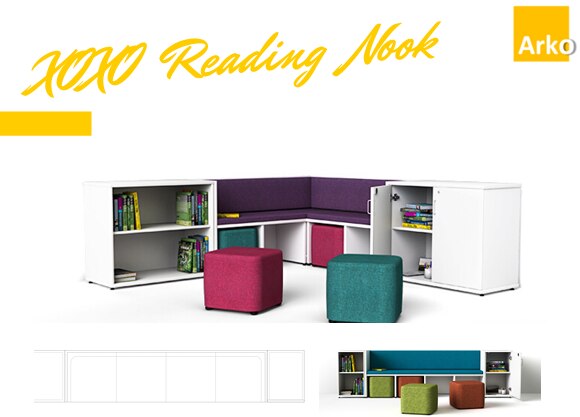 | KINDERGARTEN TABLES The XOXO Reading Nook is the perfect element to include into any classroom that needs a quiet reading space. View product → |
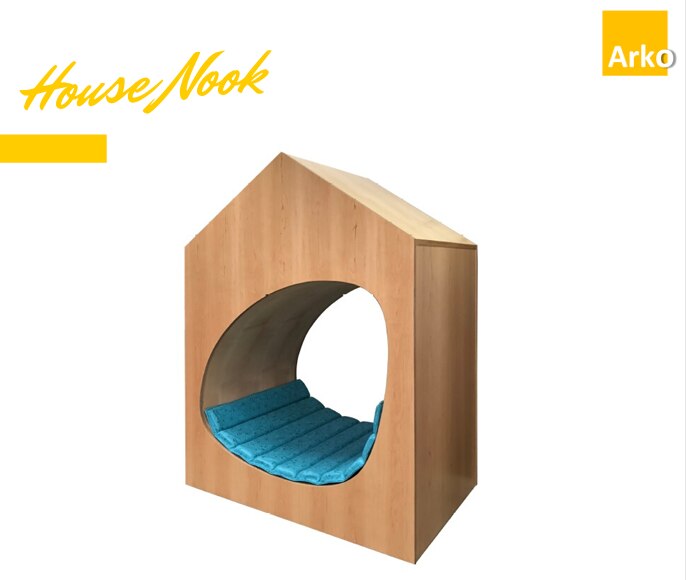 | KINDERGARTEN TABLES A cozy place to read a book alone or with a friend. Colorful fabric an finish options can really brighten up library or school spaces and make it... View product → |
Frequently asked questions
How should you create classroom storage zones?
Divide storage by user, frequency, and risk. Keep children’s daily items near entry and work areas, while teacher-controlled, heavy, dusty, or hazardous materials belong elsewhere.
Which storage format suits books, bags, and teaching materials?
Use open shelves for frequently accessed books, cubbies or hooks for children’s bags, and lockable or teacher-height units for controlled teaching materials.
How do you choose the right shelf and bay sizes?
Measure the actual books, bags, trays, and teaching kits you will store, then specify shelf depths, bay widths, and reach heights around those contents.
Where should classroom storage furniture be placed?
Keep units out of doorways, circulation routes, exits, and active work zones. Position daily-use storage near the areas where children enter, work, and return materials.
Related product
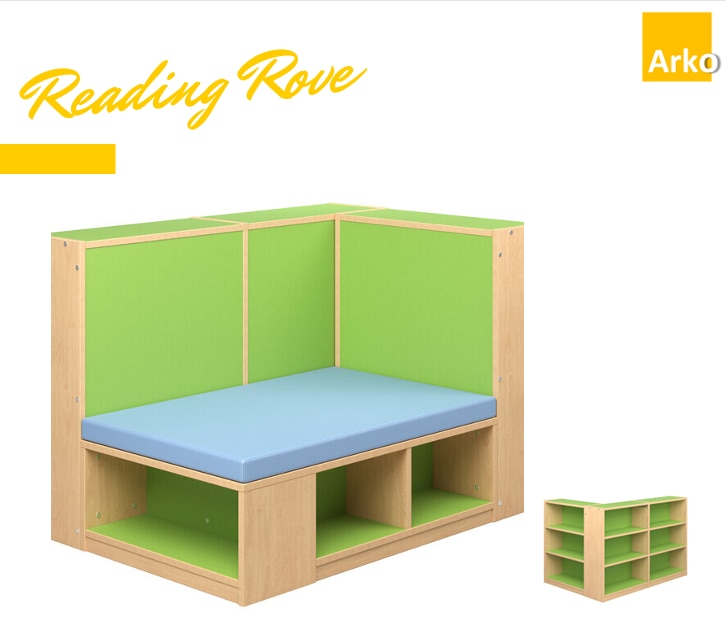 | KINDERGARTEN TABLES After picking out a book, you need to find a comfortable place to enjoy it. View product → |